Religious Music Isn’t Only Men’s Business. Meet The Mothers.
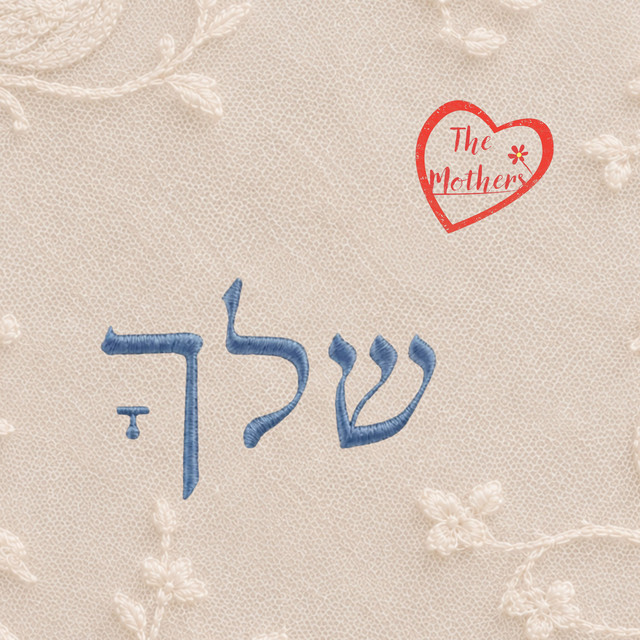
Three women who made their names in Tel Aviv’s music scene, and who all later became religious, have formed a band. The Mothers are Sharon Roter, Shiri Hadar and Noa Gino, and last Wednesday they released “Yours” (שלך, Shelach), their third single this year and a preview of their debut album.
It started with a remark. Roter was at Hadar’s studio in Tel Aviv, they were talking about music, and Roter told her she had given up. Hadar called Gino straight away. Gino had wanted to start a women’s band for years. She and her husband had already thought of Hadar, and Gino knew Roter from classes at a Jewish learning centre in Tel Aviv.
Who they are
Sharon Roter was a staple of Berry Sakharof’s live shows, singing backing vocals and dancing on stage. In 1996 she sang “The Spark” (הניצוץ, HaNitzotz), which Sakharof wrote for the film “Saint Clara” (Clara HaKedosha). Her own singles found an audience too: “Pleasant” (נעים, Na’im) reached No. 14 on Reshet Gimel’s Hebrew chart in June 2000, and “Sea” (ים, Yam) reached No. 15 in November 2002. But it was another collaboration with Sakharof that took her to the top. The two wrote “I’ll Run to You” (ארוץ אליך, Arutz Elecha) together, and it came out in December 2002 as the second single from her self-titled debut album, released in 2003. It climbed to No. 2 on 26 January 2003 and spent ten weeks on the chart. Two more albums followed, 2008’s Laila Tov - Children’s Songs and 2015’s Noshemet La’at.
In 2008 she and Ovadia Hamama released “Good Night” (לילה טוב, Laila Tov), an album of lullabies for children, with guests including Sakharof, Karni Postel, the Prachei Yerushalayim children’s choir and Hamama’s own children. “Breathing Slowly” (נושמת לאט, Noshemet La’at) came out in 2015, twelve years after her debut, and set poems by Leah Goldberg, Rachel and Zelda and teachings of Rabbi Nachman of Breslov alongside her own songs.
Hadar was there at the start of Izabo, the band she founded in Petah Tikva in 1989 with her partner, the guitarist and producer Ran Shem Tov. They mixed 1960s psychedelia with disco and Middle Eastern music, and for more than twenty years she played keyboards behind him. Their 2003 album “The Fun Makers” won over the critics, a deal with Sony BMG followed, and the band toured England, Scotland, the Netherlands and France. In 2012 a panel of industry experts picked Izabo to represent Israel at Eurovision in Baku, with “Time”, a song with English verses and Hebrew choruses. They sang it in the first semi-final on 22 May 2012 and missed the final. Hadar stepped out from behind the keyboards in 2010 with a solo album in Hebrew, which Shem Tov played on and Berry Sakharof sang backing vocals for. When the band’s rhythm section left in 2016, she and Shem Tov carried on as the duo Cherie and Renno, and Izabo reunited in 2022.
Gino is a singer and songwriter, one half of the duo Moka. She first got attention singing “Story of My Life” (סיפור חיי, Sipur Chayai), a Danny Sanderson song that he gave her for his 2001 album of songs written for other singers, “Toldot HaMayim”. She was working on an album for Hed Arzi when she became religious, and the album was never released. She went on to set prayers and Jewish texts to music, collected on her 2022 album “Elul” (אלול). Her recent songs mix her own writing with pop rock. Her 2022 single “You Are One” (אנת הוא חד, Ant Hu Chad) sets Aramaic from the opening of the Zohar, which she wrote after hearing her husband read it aloud every Shabbat. Hadar and Roter sing on it and Shem Tov arranged it. That same year all three joined Riff Cohen, Victoria Hanna and others on a Hanukkah version of the prayer “Ana Bekoach”.
How they became religious
All three became religious around the same time, each by a different route. Roter’s started after her debut album, on a trip to India, where she found her way to a Chabad house. Today she is a Breslov Hasid and lives on a religious moshav with her five children. Gino and her husband became observant together, and they also live on a religious moshav. Hadar still lives in central Tel Aviv. She came to religion through Kundalini yoga and then the study of Kabbalah, the Ramchal and Rav Kook, and she keeps the mitzvot, but her partner Shem Tov is not religious. On Shabbat she doesn’t turn on the lights and he does.
For years they called themselves the mothers, in Hebrew, because every rehearsal they booked was cancelled for the children. When they finally decided to release music, they switched to English, hoping to reach English-speaking Jews abroad.
There was also a religious obstacle. Many observant men do not listen to women singing, which for years made a band like this hard for Gino to imagine. Her rabbi approved releasing recordings, on the grounds that a man who keeps that custom can simply choose not to listen. The recordings are available to everyone, but their live shows will be for women only. Those shows are funded by a Mifal HaPais grant for launch concerts by new bands.
Back with Sakharof
Roter has been here once before. In June 2025 she released “How You Love Me” (איך אתה אוהב אותי, Eich Ata Ohev Oti), with her words and Sakharof’s music. It was their first song together since “I’ll Run to You”. He also sang backing vocals, recorded separately from her. She then invited him to a women’s show at the Einav Cultural Center in Tel Aviv. She told Yedioth Ahronoth that Rabbi Shmuel Eliyahu permitted it on one condition: they would not sing together, so he would play while she sang. The show took place on 28 October 2025, and she posted her performance of “I’ll Run to You” and her performance of “The Spark” from that night.
The songs
Gino wrote their first single, “100%”, released in August, with a chorus in English. The second, “Lord of Wonders” (אדון הנפלאות, Adon HaNiflaot), set the Yotzer Or blessing from the morning service.
Roter wrote the words and music for “Yours”, drawing on traditional sources. The verses carry lines in French, which the band said was for French Jews, and the song ends on a passage from Nishmat, the prayer of thanks said on Sabbath and festival mornings. Hadar produced it and played keyboards, drums and bass. Shem Tov played guitar alongside Roter and mixed it, and Tal Rom mastered it. The video, directed and edited by Nissim Perin Shtamper, was made with AI.
Roter told 103FM that all three found their way to religion “each in her own way.” She describes the song as a search that ends with something found, and gratitude, she said, is the cure for suffering.
Share this story


Get the next issue in your inbox.
New releases, the week’s chart, the stories behind the music and discoveries from decades past. Every Wednesday, in English.