10 Essential Hits by Ethiopian-Israeli Artists

This week is Sigd, the holiday of Ethiopian Jews, held fifty days after Yom Kippur, when the community gathers to pray, renew its covenant and give thanks for its return to Jerusalem. In its honor, we present our 10 essential Israeli hits by Ethiopian-Israeli artists.
1. “Yihye Beseder” (יהיה בסדר, “It’ll Be Okay”), Cafe Shahor Hazak with Nechi Nech


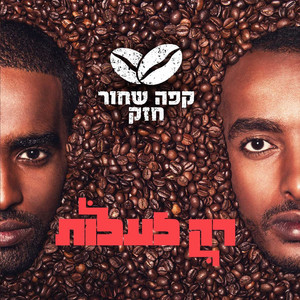
The Netanya-based Ethiopian-Israeli rap duo Cafe Shahor Hazak (“Strong Black Coffee”) had one of the biggest earworms in Israel in 2014, with a song about how everything will be okay, at a time when things were anything but. The song topped the charts in mid-May 2014, helped in no small part by the protests by Ethiopian-Israelis that broke out across the country after a police officer was caught on camera beating Damas Pakada, an IDF soldier in uniform, on the street in Holon.
The protesters blocked off the Ayalon Highway several times, some of them photographed wearing shirts that said “Avera Mengistu?”, a nod to the Ethiopian-Israeli held hostage by Hamas in Gaza, unbeknownst to most Israelis because of a gag order.
The video featured the duo performing in front of beaming, multicultural crowds of Israelis at outdoor festivals, and for many Israelis it was surely the first time they had heard of the rapper Nechi Nech, who rapped a verse on the track and helped write it.
2. “Hine Ze Kore” (הינה זה קורה, “Here It Happens”), Cafe Shahor Hazak
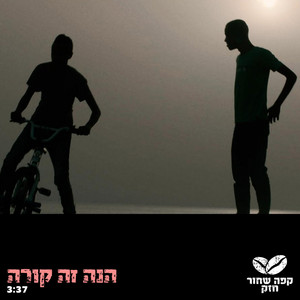
Cafe Shahor Hazak caught lightning in a bottle two more times, most notably with “Hine Ze Kore,” which peaked at No. 1 on the Kol Yisrael chart in mid-June 2016 and at No. 2 on Galgalatz a week later. It stayed on the charts for ten weeks.
3. “Rak La’alot” (רק לעלות, “Only Up”), Cafe Shahor Hazak
Though it didn’t reach the top of the charts, the rap duo’s late 2015 track peaked at #2 on the Galgalatz charts and #5 on Kol Yisrael. It also arguably came closest to matching the “hang in there, champ” aspirational vibe of Yihye Beseder, with the hook “just go up, that's all that is left. You didn't succeed, try again tomorrow. The world will give you abundant gifts, it's not written anywhere that trying is a crime.”
4. “Betoch Einayich” (בתוך עינייך, “Inside Your Eyes”), Alon Oleartchik and Cafe Shahor Hazak

Right in the middle of Cafe Shahor Hazak’s string of hits, the duo charted with this collaboration with the veteran Israeli composer and musician Alon Oleartchik. It peaked at No. 2 on the Kol Yisrael chart in February 2016 and at No. 4 on Galgalatz the same week. A departure in sound from the duo’s other hits, it also paired them with an artist from a very different era, who charted in 1984 with the classic “Ba LaShchuna Bachur Chadash” (בא לשכונה בחור חדש, “A New Guy Came to the Neighborhood”).
5. “Ahavnu” (אהבנו, “We Loved”), Ayala Ingedashet
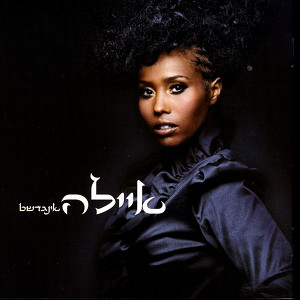
Peaking at No. 2 on Kol Yisrael in late December 2006, and only at No. 7 on Galgalatz that month, this was Ayala Ingedashet’s biggest release, and it appeared on her self-titled debut album in March 2007. Ingedashet was born in Ethiopia and arrived in Israel at age two with her family. Signed to Hed Arzi, she became the first Ethiopian-born Israeli singer with a major-label deal.
6. “Feker Libi” (“My Beloved”), Eden Alene

Eden Alene, the winner of the seventh season of the reality singing contest HaKochav HaBa, reached No. 3 on Galgalatz with “Feker Libi” in April 2020, and it stayed on the chart for ten weeks.
The title is often translated as “My Beloved,” and the song has lyrics in English, Amharic, Hebrew and Arabic. It was set to be Israel’s entry in the 2020 Eurovision Song Contest, but the contest was cancelled because of the COVID-19 pandemic.
7. “Set Me Free,” Eden Alene

Alene charted again in May 2021 with this track, Israel’s entry in the 2021 Eurovision Song Contest. During her performance she reportedly broke the record for the highest note in the contest’s history, but she finished 17th out of 26.
8. “Memaheret” (ממהרת, “In a Hurry”), Ayala Ingedashet
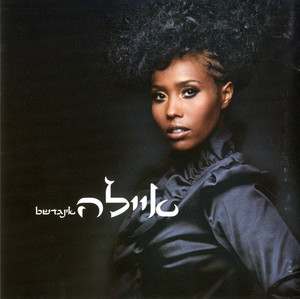
Ayala Ingedashet’s chart debut peaked at No. 6 on Kol Yisrael in late November 2006 and stayed on the chart for nine weeks. It never made the top ten on Galgalatz. Its run overlapped with “Ahavnu,” so for a short time she had two hits on the radio at once.
9. “Nanu Ney,” Ester Rada
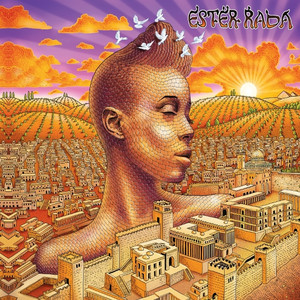
Born to religious Ethiopian Jews from a village near Gondar, the musician and actress Ester Rada grew up in Kiryat Arba in the West Bank before moving to Netanya as a teenager. Arguably the Ethiopian-Israeli artist best known outside Israel, she had her highest-charting Israeli track with “Nanu Ney,” which reached No. 7 on Galgalatz in March 2014.
10. “Life Happens,” Ester Rada
Before “Nanu Ney,” Rada’s “Life Happens” reached No. 8 on Galgalatz in April 2013. Before it, the only other Ethiopian-Israeli women to chart in Israel were Ayala Ingedashet and Cabra Casay, through her work with The Idan Raichel Project.
Share this story


Get the next issue in your inbox.
New releases, the week’s chart, the stories behind the music and discoveries from decades past. Every Wednesday, in English.